Text: Gesche Schifferdecker
Transformative Change Conference in Brussels, 4-5 June 2026 was jointly organized by nine Horizon Europe projects: BAMBOO, BIOTraCes, BIONEXT, TransPath, DAISY, TC4BE, PLANET4B, BioAgora, and CircHive. The conference brought together researchers, practitioners, policymakers, businesses, civil society actors, and innovators to explore one of the most pressing questions of our time: how can we create the systemic changes needed to halt biodiversity loss while building more just and resilient societies?
Across two days of dialogue, participants shared evidence, experiences, and reflections from projects and initiatives across Europe and beyond. While the topics ranged from governance and policy to value chains, finance, justice, and societal values, a common message emerged: transformative change is not about doing more of what we already do. It requires rethinking the systems, assumptions, and relationships that shape our interactions with nature and each other.
Transformation Requires More Than Speed
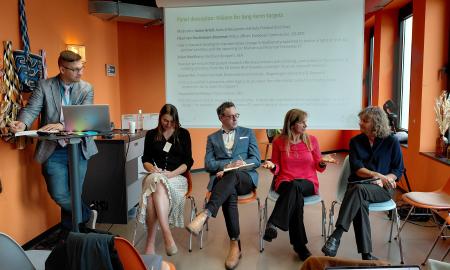
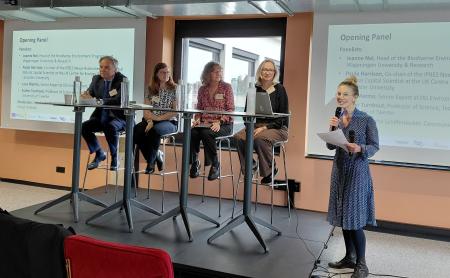
The conference opened with a discussion on what transformative change actually means in practice. A recurring theme was that today's political and economic systems often reward speed, visibility, and short-term results. Yet genuine transformation may depend on persistence, cooperation, and long-term commitment.
Participants highlighted an important paradox: many of us benefit from the systems we seek to change. As a result, transformative change inevitably involves difficult conversations about power, equity, and the fair distribution of benefits and costs. At the same time, examples from grassroots initiatives, local innovations, and policy reforms demonstrated that change is already happening in many places.
Key takeaway:
Transformative change begins with the courage to imagine alternative futures and the willingness to work collectively towards them.
Governance and Policy: Creating the Conditions for Change
A major focus of the conference was the role of governance and policy in enabling transformation.
Several presentations showcased local biodiversity innovations from across Europe, illustrating how transformative change often starts at the local level. Successful examples shared common characteristics: long-term support, reduced administrative barriers, stronger engagement with communities, and opportunities for marginalized groups to participate in decision-making.
Speakers emphasized that governance systems must move beyond top-down approaches. Transformation requires bringing diverse perspectives into policy processes, creating networks that connect local initiatives to larger scales, and ensuring that biodiversity goals are integrated across sectors.
Another key discussion centered on why biodiversity remains insufficiently prioritized despite its importance. Evidence from multiple case studies showed that attitudes, social norms, values, and opportunities for learning strongly influence whether people engage with biodiversity issues. Small actions, when supported by institutions and communities, can become powerful drivers of larger change.
Policy recommendations repeatedly stressed the need for better integration between biodiversity, climate, health, food systems, and social justice objectives. Participants also highlighted the importance of creating mechanisms that give citizens and stakeholders genuine influence over decisions that affect their environments.
Key takeaways:
- Support local innovations and community-led action.
- Include marginalized voices in governance processes.
- Align biodiversity goals with broader social and economic policies.
- Create stronger links between local initiatives and larger policy frameworks.
- Move from biodiversity as an outcome to biodiversity as a guiding principle throughout decision-making.
Learning from Real-World Case Studies
The conference showcased a wide range of practical examples that illustrated both opportunities and challenges for transformative change.
Several case studies focused on global value chains, including cocoa, coffee, cotton, fisheries, forestry, agriculture and banking. A recurring lesson was that sustainability policies often overlook the perspectives of local communities and small-scale producers, even when those actors are directly affected by environmental regulations.
Examples from agricultural systems demonstrated the complexity of measuring biodiversity impacts. While new methods and tools for biodiversity footprinting are improving our understanding, participants acknowledged that data limitations and methodological challenges remain significant barriers.
Digital technologies also featured prominently. One project demonstrated how mobile applications can help monitor deforestation and support compliance with sustainability requirements while simultaneously creating opportunities for local capacity building and knowledge sharing.
Business and finance perspectives highlighted the growing recognition that biodiversity loss creates tangible risks for economic systems. Financial institutions are increasingly exploring ways to identify biodiversity-related risks, engage clients, and improve transparency.
Across all case studies, one message stood out: context matters. Solutions that work in one place cannot simply be copied elsewhere without understanding local social, economic, and ecological realities.
Key takeaways:
- Sustainability solutions must account for local contexts and communities.
- Better biodiversity measurement tools are needed, but measurement alone is not enough.
- Financial and business actors have an important role to play in biodiversity transitions.
- Digital innovation can support transparency, monitoring, and stakeholder engagement.
- Transformation requires balancing environmental, social, and economic objectives.

Bridging Research, Policy, and Action
The second day focused strongly on implementation.
Researchers presented new frameworks, action guides, and methods designed to support transformative change. Discussions highlighted the importance of co-design, stakeholder engagement, and participatory approaches that move beyond knowledge production towards practical action.
Participants acknowledged a persistent challenge: there is already substantial knowledge about biodiversity loss and potential solutions, yet action often lags behind. Several speakers emphasized that knowledge alone does not create change.
Instead, success depends on translating evidence into messages that resonate with decision-makers and stakeholders. This requires understanding policy needs, reducing complexity where possible, avoiding jargon, and creating opportunities for dialogue and ownership.
The discussion also highlighted the need for stronger interfaces between research and policy. Researchers are often not trained to communicate effectively with policymakers, while policymakers may struggle to access and apply scientific findings. Building bridges between these communities emerged as a critical priority.
Key takeaways:
- Knowledge must be translated into actionable messages.
- Tailoring communication to specific audiences increases impact.
- Researchers and policymakers need stronger partnerships.
- Participatory approaches help build ownership and legitimacy.
- Effective implementation requires learning from both successes and failures.
Looking Forward: A Perspective from CircHive
We attended the conference from the perspective of the CircHive project, which explores how biodiversity considerations can be integrated into decision-making, value chains, and sustainability transitions.
Many of the discussions resonated strongly with the challenges CircHive seeks to address. The emphasis on systems thinking, stakeholder engagement, biodiversity footprinting, justice, and transformative governance reinforced the importance of approaching biodiversity not as a standalone issue but as a cross-cutting dimension of societal transformation.
Perhaps the most important lesson from the conference was that transformative change cannot be delivered through a single policy, technology, or project. It emerges through collaboration, experimentation, learning, and the inclusion of diverse perspectives.
As biodiversity loss continues to accelerate, the conference offered both a reality check and a source of optimism. The knowledge, tools, and innovations already exist. The challenge now is to connect them, upscale them appropriately, and ensure that they contribute to futures that are not only nature-positive, but also equitable and resilient.