By Orest Kiyko
Do you want to run a profitable business while also being genuinely nature-positive? Or do you feel like these two goals are fundamentally locked in a zero-sum contradiction?
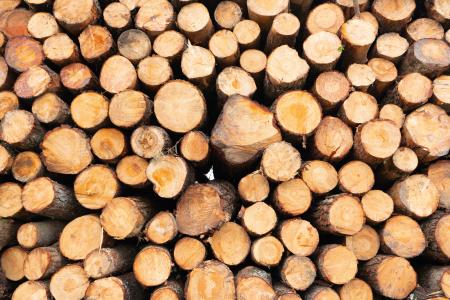
The global industry is facing two simultaneous megatrends: the push to replace fossil materials with biomaterials and the urgent need to mitigate biodiversity loss. Yet, these trends can often feel deeply contradictory. Simply switching to bio-based alternatives does not guarantee a healthy ecosystem. Extracting biological resources at scale can inadvertently lead to land-use pressure, monocultures, and degraded wildlife habitats.
For a long time, the industrial mindset dictated that economic development and strict environmental rules were natural adversaries. Even within the modern green transition, a quiet friction persists: the bioeconomy versus biodiversity.
For instance, Sampsa Auvinen says the European woodworking industry is going through one of its most difficult periods in decades. According to Sampsa Auvinen, Chairman of the Board of the European Woodworking Industry Confederation, the current crisis for the industry is deeper than the 2008 financial crisis and the market turmoil following the start of Russia's full-scale war against Ukraine. Auvinen is particularly critical of the European Union’s policies on forests, climate, and construction. In his view, the EU is simultaneously pursuing two objectives that are difficult to reconcile. On the one hand, European policies promote timber construction, the use of renewable materials, and the substitution of more carbon-intensive products such as steel, concrete, and plastics. On the other hand, the EU supports the expansion of conservation measures, the increase of protected areas, and the reduction of timber harvesting volumes. Auvinen considers this a direct contradiction. If Europe wants more wooden buildings, more timber-based structures, and wider use of biomaterials, it needs a stable and reliable raw material base. However, if timber harvesting is reduced, the capacity to expand wood processing industries and timber construction is also constrained. In other words, it is impossible to simultaneously demand that industry produce more wood-based products while politically restricting access to the wood resources required to manufacture them.
For decades, the corporate world treated biodiversity and natural capital as a niche corporate social responsibility (CSR) goal - a "nice-to-have" badge for companies looking to polish their green credentials. As global megatrends accelerate, that era is officially over. Transitioning to a nature-positive business model is no longer an optional branch of corporate innovation; it is the only path to commercial survival.
The $44 Trillion Existential Risk
International business journals and institutions like The Economist and the World Economic Forum (WEF) have made the stakes clear: more than half of global GDP ($44 trillion) is moderately or highly dependent on nature and its ecosystem services. When these natural systems degrade, supply chains don’t just fluctuate - they collapse.
The Intergovernmental Science-Policy Platform on Biodiversity and Ecosystem Services (IPBES) Business and Biodiversity Assessment classifies nature loss not merely as an environmental crisis, but as a systemic economic risk. As planetary limits are reached, businesses operating on old "take-and-deplete" models face immediate structural extinction due to vanishing raw materials, stricter legal penalties, and intense investor pressure from disclosure frameworks like the TNFD (Taskforce on Nature-related Financial Disclosures).
The reason many businesses stall in their sustainability transition is metric paralysis; measuring biodiversity feels abstract and overwhelmingly complex. However, a renewed sense of possibility is emerging across the global markets. Leading networks like the Capitals Coalition are shifting the corporate conversation away from isolated green accounting silos and toward an integrated decision-making framework.
This paradigm shift relies on two breakthrough realisations:
- From Impacts to Dependencies: True resilience means moving past only measuring your impacts (what your business does to nature) and starting to map your dependencies (how your business model relies on natural capital to survive).
- The Multi-Capital Lens: Business success is directly underpinned by an interconnected web of natural, social, human, and produced capital. When you protect natural capital, you inherently secure supply chain resilience, protect local livelihoods, and optimise produced financial assets.
Integrating nature into business-decision making still remains one of the most complex and critical issues facing sustainability practitioners today. By viewing nature as an essential capital asset rather than a regulatory burden, forward-thinking businesses are turning compliance into an open field of commercial opportunity.
Today the global industries are caught in a crossfire between two massive, colliding megatrends:
- The market pressure to replace fossil materials with biomaterials.
- The urgent ecological necessity to mitigate biodiversity loss.
If a business blindly transitions to the bioeconomy without a nature-positive architecture, it invites severe land-use friction and resource scarcity.
The conclusion is stark: If your business model degrades biodiversity, your supply chain has an expiration date.
But what if we told you that profitability and ecological stewardship no longer have to pull in opposite directions?
Within the frameworks of the CircHive project, we established the Biomaterial Hub - a unique collaborative ecosystem designed to bridge this exact gap. We are a diverse collective, bringing together global frontrunners and agile small-and-medium enterprises (SMEs) to rewrite the interface between business and nature.
Our hub features pioneers like Stora Enso, a world leader in massive wooden construction, and Novamont, a trailblazer in the development of truly biodegradable plastics. Alongside these international titans, we are joined by Agroderew and Millwood, two resilient woodworking SMEs from Ukraine that demonstrate how circular thinking operates on the front lines of manufacturing.
Our main message to the broader bioeconomy society is clear: It is time to cross over and join the biodiversity community.
The Reality: Biodiversity Measurement is Complicated
We recognise the hesitation. While calculating carbon emissions (CO2) has become relatively standardised, measuring biodiversity impacts requires incredibly complicated methods and multi-layered scientific approaches. Biodiversity cannot be boiled down to a single universal metric; it encompasses genetic variety, species richness, and complex ecosystem services unique to specific geographies.
For an SME or even a multi-national corporation, building the internal capacity to measure, track, and accurately report on these variables can feel overwhelming. This complexity often stalls good intentions, leaving businesses stuck in standard bio-utilisation without validating their true ecological footprint.
This is exactly why the Biomaterial Hub exists. Through the CircHive project, we provide businesses with a structured, scientifically rigorous framework to measure your biodiversity impact. We take the complexity out of the equation, giving you the practical tools needed to mitigate your ecological footprint and maximise nature-positive opportunities for your business.
The Solution: Leveraging Our 3 Core Pillars
The Biomaterial Hub allows your organisation to move past the traditional contradictions of eco-development by leveraging three core pillars:
1. Circularity
True sustainability isn’t just about changing the raw input from fossil-based to bio-based; it is about keeping that material in the loop for as long as possible. By prioritising cascading use - where wood or biodegradable plastics are systematically reused, repurposed, and recycled - we reduce the baseline demand on raw ecosystems, allowing natural habitats the space they need to regenerate.
2. Climate
Sustainably managed biomaterials are a massive lever for climate mitigation. For example, substituting high-impact materials with wood not only avoids heavy industrial emissions but actively locks up atmospheric carbon within the physical fiber of the products. By aligning carbon storage with biodiversity protections, we create holistic environmental assets.
3. Citizen Thinking
We believe that industrial shifts cannot happen in a vacuum. Citizen thinking bridges the gap between scientific metrics, corporate governance, and community values. It ensures that the bioeconomy benefits local societies, respects regional environmental boundaries, and honours consumer demands for authentic, verifiable sustainability.
This is a systemic challenge that no individual enterprise can solve in isolation. The structural connection between the overarching CircHive project and the specialised Biomaterials Hub is designed precisely to provide the operational lifeline your company needs to survive.
The CircHive Project delivers the rigorous, science-led methodologies required to measure your true biodiversity impact. It standardises incredibly complex environmental data into clear, auditable business intelligence that satisfies regulators, central banks, and green allocators of capital.
The Biomaterials Hub functions as the practical execution engine. We take CircHive's high-level frameworks and translate them into floor-level manufacturing realities, R&D initiatives, and sourcing solutions.
| Ecosystem Element | Strategic Function | Business Value |
| The CircHive Project (The Analytical Framework) | Delivers the rigorous, science-led methodologies required to measure and value your true natural capital footprint. | Converts complex ecological data into clear, auditable business intelligence that satisfies regulators, central banks, and green allocators of capital. |
| The Biomaterials Hub (The Operational Action) | Translates CircHive's high-level frameworks into floor-level manufacturing realities, R&D initiatives, and sourcing solutions. | Secures your raw material pipeline by embedding practical, nature-positive mechanics directly into your supply chain. |
Core Activities Driving the Biomaterials Hub
Helping businesses implement the exact variables such as landscape connectivity, targeted plant/wood species selection, and regenerative agriculture/forestry practices to protect your raw material pipeline.
Facilitating joint innovation into alternative feedstocks (like agricultural residues or secondary streams) and material recycling to establish true cascading loops, drastically reducing your baseline pressure on wild ecosystems.
Uniting multinational industry leaders (such as Stora Enso and Novamont) alongside agile, battle-tested SMEs (like Agroderew and Millwood) to co-develop business models where economic growth actively supports life on Earth rather than diminishing it.
To remain viable over the next decade, the bioeconomy society must cross over into the biodiversity community. Securing your place in the Biomaterials Hub means shifting your relationship with nature from compliance-driven risk management to your sharpest competitive advantage.
Don't leave your business exposed to the next wave of resource and regulatory shocks. Join the Biomaterials Hub, leverage the CircHive framework, and secure your company's future today.
Join the Biomaterial Hub
The "biomaterials opportunity" is no longer just about harvesting from nature—it is about partnering with nature. By integrating complex biodiversity metrics into standard business practices, members of our hub are proving that economic growth can actively support life on Earth rather than diminish it.
From Compliance to Opportunity.
Many businesses currently view biodiversity primarily through the lens of risk and compliance.
New regulations, reporting requirements, and sustainability frameworks are often perceived as additional burdens. While compliance remains important, the most innovative companies increasingly recognise biodiversity as a source of opportunity rather than merely a source of constraints.
Nature-positive business models can generate value in multiple ways:
- Improved resource efficiency;
- Reduced material losses and waste;
- Enhanced brand reputation;
- Better access to sustainable finance;
- Increased customer trust;
- Stronger supply chain resilience;
- New markets for sustainable products and services.
The key is understanding how biodiversity, circularity, and climate action interact.
The CircHive approach helps businesses explore these interactions through three interconnected pillars:
Whether you are a global enterprise rethinking your supply chain or an innovative SME looking to scale responsibly, your voice and expertise are needed. Let’s dissolve the old boundaries between the bioeconomy and biodiversity conservation.
Nature’s value must be at the heart of economics: what can businesses learn from the CircHive Biomaterial Hub for that?
The transition of Europe towards a circular bioeconomy is speeding up. Bio-based materials are increasingly replacing fossil-based alternatives in construction, packaging, textiles and manufacturing. At the same time, society expects this transition to halt, rather than accelerate, biodiversity loss. For many companies, these objectives appear difficult to reconcile. Can businesses expand the use of renewable biological resources while simultaneously protecting ecosystems and maintaining profitability?
The need to preserve biodiversity is recognised worldwide and confirmed by many international reports. The World Economic Forum’s “The Global Risks Report” (2026) identifies biodiversity loss and ecosystem collapse, critical changes to Earth systems, natural resource shortages, and pollution among the most severe global risks over the next 10-years. The report highlights that these interconnected environmental risks are expected to increasingly affect businesses through supply chain disruptions, reduced availability of natural resources, and other impacts. As a result, considering biodiversity as part of business strategy is becoming increasingly important. The Kunming-Montreal Global Biodiversity Framework (2022), particularly Target 15, calls on businesses to assess, monitor and disclose their dependencies and impacts on biodiversity, while the Taskforce on Nature-related Financial Disclosures (2023) provides a globally recognised framework for integrating nature-related risks and opportunities into corporate decision-making. Within the European Union, the Corporate Sustainability Reporting Directive (2022) and the European Sustainability Reporting Standards (2023) further operationalise these principles by requiring companies within their scope to identify, assess and disclose biodiversity-related impacts, dependencies, risks and opportunities using robust, science-based methodologies and decision-useful metrics.
The CircHive Biomaterials Hub provides the scientific knowledge and methods companies seek to address new challenges, along with public expectations for meeting them. The Hub provides companies with access to Biodiversity Footprint Assessment methodologies, Natural Capital Accounting approaches, harmonised datasets, and interdisciplinary expertise, enabling them to produce robust biodiversity-related data, build strong evidence for strategic decision-making, and support the implementation of internationally recognised frameworks and reporting requirements. In addition, being part of the Hub helps companies work closely with researchers, technology system builders, and other business stakeholders. That means they can innovate, strengthening their company’s resilience and developing their competitive edge as they transition to a sustainable, resource-efficient, and nature-positive Bioeconomy.
References
Convention on Biological Diversity. (2022). Kunming–Montreal Global Biodiversity Framework. https://www.cbd.int/gbf
European Commission. (2023). Commission Delegated Regulation (EU) 2023/2772 of 31 July 2023 supplementing Directive 2013/34/EU as regards sustainability reporting standards (European Sustainability Reporting Standards – ESRS). https://eur-lex.europa.eu/eli/reg_del/2023/2772/oj
European Parliament & Council of the European Union. (2022). Directive (EU) 2022/2464 of the European Parliament and of the Council of 14 December 2022 as regards corporate sustainability reporting (Corporate Sustainability Reporting Directive). https://eur-lex.europa.eu/eli/dir/2022/2464/oj
Taskforce on Nature-related Financial Disclosures. (2023). Recommendations of the Taskforce on Nature-related Financial Disclosures. https://tnfd.global/recommendations/
World Economic Forum. (2026). The Global Risks Report 2026 (21st ed.). World Economic Forum. https://www.weforum.org/publications/global-risks-report-2026/
Join the Biomaterial Hub today, leverage the CircHive framework, and let’s build a profitable, nature-positive future together.