
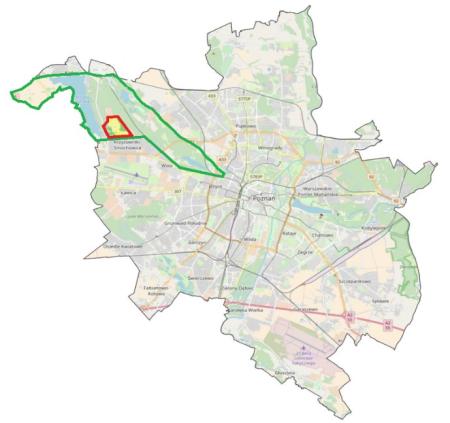
Situated in Poland, Poznan is one of the country’s oldest cities. It boasts a unique ecological landscape characterized by a configuration of ‘green wedges’ arising due to its landscape features, historical conditions, and system of river valleys. The city is surrounded by natural spaces along river valleys in both north-south and east-west directions. In areas outside the city, the ‘green wedges’ connect to larger regional forests. In the city centre, however, the green wedges are narrower and become fragmented due to buildings and infrastructure. These green spaces are important to maintain both in the city centre and outskirts for better air quality, CO2 absorption, urban heat reduction, and water management.
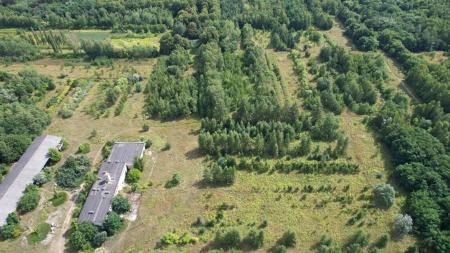
City urban development often require using land efficiently, which can lead to changes to the initial land-use plans. For instance an area that was meant for a golf course ended up unused for several years when the project fell through. In 2019, the city decided on a different approach and turned it into a new urban forest. Even though the land is ideal for reforestation and planting trees, there has not been enough budget allocated from the municipality for the project.
Between 2020 and 2021, the Poznań Municipal Forest Department made a plan to plant trees on 5 hectares of land in the north-western part of the city. This plan would help the environment and provide educational and recreational opportunities. However, economic challenges due to the pandemic in 2020 affected the city’s priorities given to health and economic issues.
But there is good news: As a result of efforts in spreading word among entrepreneurs and policy makers on the importance of nature-based solutions, the topic received recognition. Within the project Connecting Nature, land designation for new urban forests were acknowledged. Poznań began collaborating with two companies, Reforest’Action from France and Green-up from Poland, to work on the new forest.
Afforestation project
Reforest’Action from France is a certified B Corp company- a private certification of for-profit companies of their “social and environmental performance”. Their model is based on the crowd-planting model (collecting and pooling funds for planting trees), where they’ve successfully planted 12 million trees in 35 countries in collaboration with many companies and inhabitants. Reforest’Action was looking for local authorities with a need to plant a forest on already owned and dedicated to afforestation in Central and Northern Europe for the implementation and reimbursement of their planting campaigns.
The proposal for trilateral cooperation addressed key issues identified in previous municipal engagements with public-private partnerships. Local authorities face challenges in collaborating through sponsorship due to legal constraints within public administration. At the same time, donation arrangements often lack appeal for businesses. The proposed solution involves a collaborative effort among a minimum of three parties, enabling the distribution of tasks and responsibilities based on their respective financial and organizational capacities. In the end, the partners involved were Reforest’Action (FR) – the investor, Green-Up (PL) – the project leader responsible for planting, and City of Poznań (PL) – land owner responsible for forest maintenance, represented by Poznań Municipal Forests and Poznań City Hall.
One of the key requirements for establishing a successful collaboration with an external investor was the possession of designated land for an urban forest, in Poznan’s case, the Krzyżowniki-Smochowice area. Notably, the administrative procedures for this area had been initiated before finalizing the partnership with third parties. This proactive approach facilitated the prompt commencement of tree planting shortly after the agreement was signed among the collaborators. Precise timing is essential in such partnerships, given that there are two optimal periods in Poland for forest planting: spring and autumn.
Through a series of partner meetings, the scope of the trilateral agreement was defined and expectations were clarified.
Results
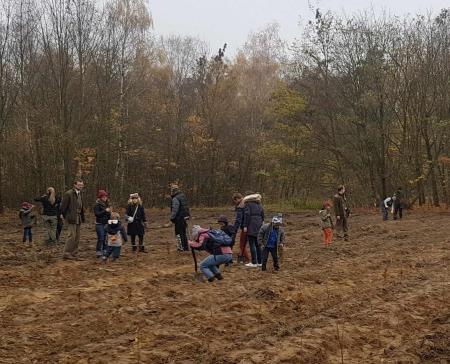
The result of the cooperation was the plantation of 53 000 trees (oak, linden, beech, cherry tree, sycamore, rowan tree), establishing in total 10 ha of new urban forest in November 2021 and April 2022. The first planting action included the participation of district inhabitants (neighbours, students and scouts), representatives of the city and district authorities and administration. The second round of planting was carried out in parallel with the monitoring of the already planted trees.
For the City of Poznań, there are more benefits of the afforestation project aside from environmental ones. The future social benefits are significant: increasing the quality of life in the district and improving health and well-being. The city is now already witnessing the regeneration of municipal areas, alongside the reinforcement of social participation, local identity, and collaborative efforts towards the creation of shared benefits.
Vision
The trilateral collaboration approach employed in the afforestation project offers a valuable opportunity to explore the feasibility of executing projects through collaboration with businesses and external partners. It unveils fresh avenues for initiating nature-based solutions (NBS) projects in association with private investors, smaller enterprises, or non-profit organizations. These entities often possess significant expertise in the collaborative implementation of blue and green infrastructure within urban ecosystems.
In the coming years, the City of Poznan is planning to transfer this tested mechanism in implementing different types of nature-based solutions – amplifying the capacity of the NBS projects that have been so far primarily financed by the municipality and EU programmes. Future perspective includes extending the network of natural playgrounds to other several nature-oriented spaces, creating 10 new green schoolyards in the coming four years, as well as introducing many other blue and green infrastructure solutions which will bring numerous environmental, social and economic benefits. The availability of financing beyond municipal/city budget is crucial. The greater the variety of financing alternatives for NBS in urban ecosystems, the more significant the contribution of NBS and the bigger its role in climate change adaptation and risk reduction.